
Ashwagandha vs Lion’s Mane: Botanical Extract or Mushroom Product?
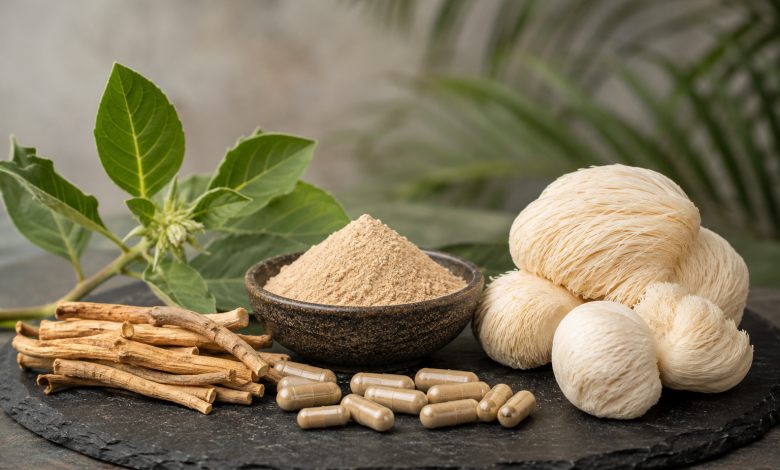
Ashwagandha vs Lion’s Mane is a comparison between two fundamentally different organisms. Ashwagandha is a flowering plant called Withania somnifera. Lion’s Mane is a fungus called Hericium erinaceus. Their source materials, chemical markers, extraction methods, research questions, and label requirements are not interchangeable.
The distinction matters because a Lion’s Mane capsule may contain fruiting body, mycelium, or both. An ashwagandha capsule may contain root, leaf, or a standardized extract. Before comparing serving amounts or marketing claims, identify the exact material inside each product.
Is Lion’s Mane a botanical supplement?
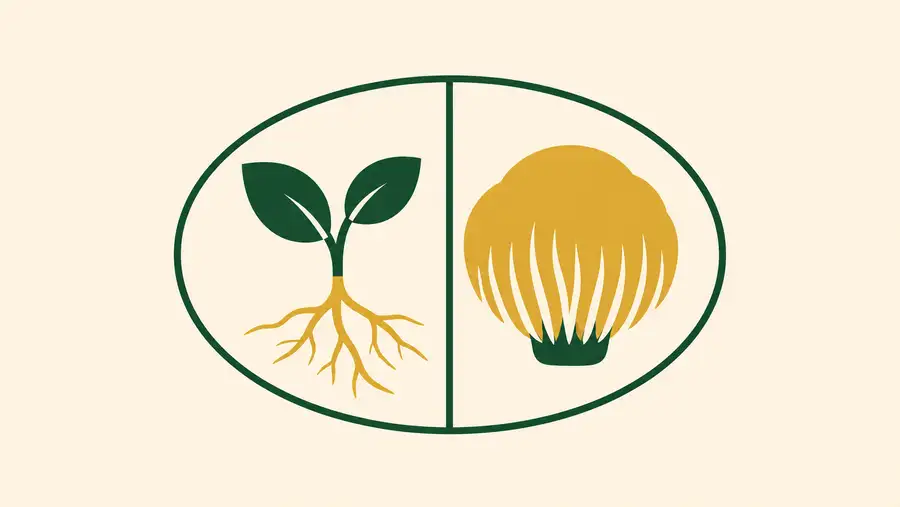
No. Lion’s Mane is a fungal product, not a botanical ingredient. Botanicals come from plants, while mushrooms and their mycelia belong to the kingdom Fungi.
| Comparison point | Ashwagandha | Lion’s Mane |
|---|---|---|
| Scientific name | Withania somnifera | Hericium erinaceus |
| Kingdom | Plantae | Fungi |
| Family | Solanaceae | Hericiaceae |
| Commonly used material | Root or root-and-leaf material | Fruiting body, mycelium, or both |
| Common markers | Withanolides | Beta-glucans, hericenones, and erinacines |
| Frequent formats | Powder, capsule, dry extract, or tincture | Mushroom powder, mycelial biomass, or extract |
| Main human research areas | Stress, sleep, and selected performance outcomes | Cognition, mood, and subjective stress |
Calling both ingredients “adaptogens” does not erase this difference. Adaptogen is a loosely defined functional term. It is not a taxonomic category, manufacturing standard, or indication that two supplements work through the same compounds.
Which parts of ashwagandha appear in supplements?
Most ashwagandha supplements use the root, but some combine root and leaf. The label should identify the plant part because root and leaf have different chemical profiles.
Root powder
Root powder contains dried and milled plant tissue. It includes fiber, starch, withanolides, alkaloids, and other natural constituents. A gram of powder is not equivalent to a gram of concentrated extract.
Root extract
A root extract uses water, ethanol, or another solvent system to separate selected compounds from the starting material. Labels may provide an extraction ratio and a withanolide percentage or amount.
Root-and-leaf extract
This format combines two plant parts. It should not be represented as identical to a root-only preparation. Research involving one proprietary extract does not automatically apply to every ashwagandha product with the same total milligram amount.
What do fruiting body and mycelium mean in Lion’s Mane products?
The fruiting body is the visible mushroom structure. Mycelium is the branching fungal network that grows through a substrate. Either material may appear in a Lion’s Mane supplement, but they are not chemically identical.
Fruiting body material
Fruiting body products may contain dried mushroom powder or an extract. Research has identified compounds called hericenones in fruiting bodies. Fruiting bodies also contain beta-glucans and other fungal constituents.
Mycelial material
Mycelium can be grown in liquid culture or on a solid substrate such as grain. Research has identified erinacines in certain Lion’s Mane mycelial materials. Their presence and concentration depend on the strain, cultivation method, and processing.
If mycelium grows on grain, the harvested ingredient may contain fungal material plus residual substrate. The label should state whether it contains pure mycelial extract, myceliated grain, or a broader mycelial biomass.
Combined fungal material
Some products combine fruiting body and mycelium. A combined formula is not automatically more complete or more effective. Its value depends on identity, proportions, extraction, analytical testing, and whether it matches the preparation used in relevant human research.
 How should powders and extracts be compared?
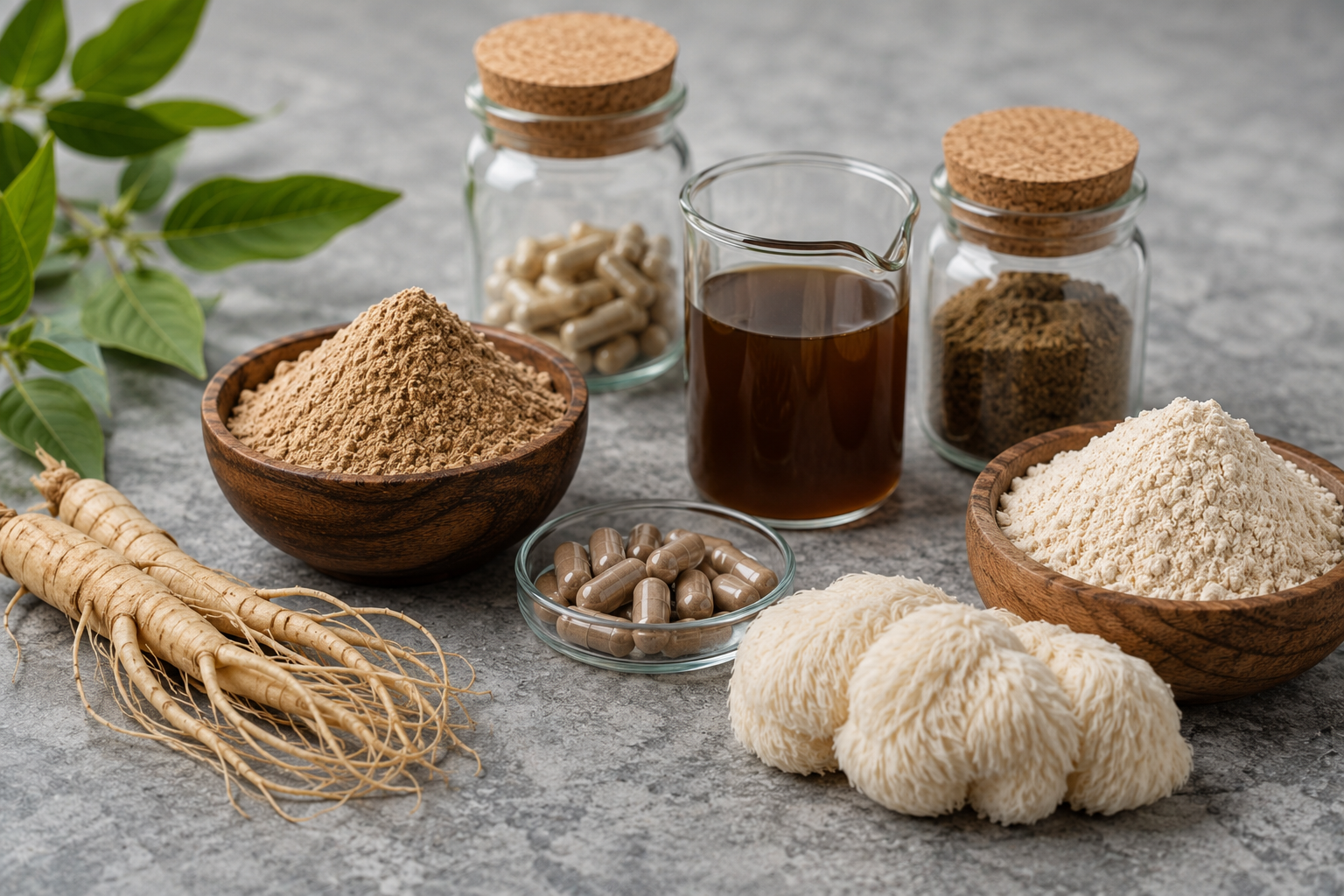 How should powders and extracts be compared?
Compare like with like. Whole powders contain the original biological material, while extracts concentrate selected soluble constituents.
| Label term | What it usually means | What remains unclear without more detail |
|---|---|---|
| Ashwagandha powder | Milled root or other declared plant material | Natural variation in withanolide content |
| Ashwagandha extract | Solvent-extracted plant material | Plant part, solvent, ratio, and marker amount |
| Lion’s Mane powder | Ground fruiting body or another fungal material | Exact fungal part and substrate content |
| Lion’s Mane extract | Concentrated soluble mushroom or mycelial constituents | Source material, solvent, ratio, and tested markers |
| Mycelial biomass | Mycelium harvested with some or all growth substrate | Proportion of fungal tissue to substrate |
An extraction ratio such as 8:1 or 10:1 describes manufacturing input and output. It does not prove clinical strength. Ratios can also be difficult to compare when products use different solvents, starting materials, or calculation methods.
Which chemical markers matter on the label?
Useful markers differ between ashwagandha and Lion’s Mane. A percentage from one category cannot be compared with a percentage from the other.
Withanolides in ashwagandha
Withanolides are steroidal lactones used to characterize many ashwagandha extracts. The label should state whether the figure represents total withanolides and whether it applies to the listed serving or to the raw ingredient.
Withanolide standardization does not describe every compound in the extract. Plant part, extraction solvent, and analytical method still matter.
Beta-glucans in Lion’s Mane
Beta-glucans are structural polysaccharides found in fungal cell walls. A beta-glucan result is more specific than a broad “polysaccharides” claim, which may also include alpha-glucans such as starch.
Beta-glucan content does not identify hericenones or erinacines. Those compounds require separate analytical methods. A label that names them without providing a measured amount offers limited information about the finished batch.
What does the human evidence show?
No strong head-to-head evidence establishes ashwagandha or Lion’s Mane as the better supplement. Studies use different materials and measure different outcomes.
Ashwagandha evidence
Some human studies report changes in perceived stress and selected sleep measures after participants used particular ashwagandha extracts. Many trials have small samples, short durations, and substantial differences in plant parts and standardization.
These findings should not be extended to every powder, tincture, or combination formula. Evidence for cognitive performance and many other promoted outcomes remains limited or inconsistent.
Lion’s Mane evidence
Lion’s Mane research includes small studies involving older adults with cognitive difficulties and healthy younger adults. A 2009 trial included 30 adults with mild cognitive impairment. Its results cannot represent younger healthy users or every commercial mushroom extract.
A 2023 pilot study followed 41 healthy adults for 28 days. It reported a small number of tentative findings alongside null results. A 2025 crossover study with 18 healthy adults found no significant overall improvement in composite cognition or mood after an acute fruiting body extract, although one individual task differed.
These studies show why isolated positive results need context. Testing many cognitive tasks increases the chance of finding one difference. Product material, participant age, study duration, and statistical design all affect interpretation.
Can ashwagandha and Lion’s Mane replace each other?
 Can ashwagandha and Lion’s Mane replace each other?
No direct substitution is justified. Replacing one changes the organism, raw material, chemical profile, and research basis.
Ashwagandha is often positioned around stress or sleep. Lion’s Mane is commonly positioned around cognition or focus. Those marketing categories overlap, but they do not establish equal effects or a predictable choice for an individual.
Using both at once also makes personal tracking harder. If sleep, digestion, mood, or concentration changes, you may not know which product, carrier, added ingredient, or routine change contributed.
What safety differences require attention?
Both products require individual assessment. Food history, natural origin, or a mushroom image on the label does not guarantee suitability.
Ashwagandha safety points
Ashwagandha may cause drowsiness, nausea, loose stools, vomiting, or stomach discomfort. Rare liver-injury reports have involved ashwagandha supplements. It may also affect thyroid function.
Potential interaction categories include sedatives, anticonvulsants, immunosuppressants, thyroid medicine, and medicines used for blood pressure or blood glucose. Ashwagandha should be avoided during pregnancy and breastfeeding. Surgery, autoimmune conditions, thyroid disorders, liver concerns, and hormone-sensitive prostate conditions require professional guidance.
Lion’s Mane safety points
Small human studies have reported relatively few adverse events, but the safety database remains limited. Possible reactions include nausea, abdominal discomfort, diarrhea, headache, and hypersensitivity.
People with mushroom allergies should use particular caution. Evidence is insufficient to make broad assumptions for pregnancy, breastfeeding, long-term use, or complex medication routines. A clinician or pharmacist should review uncertain combinations.
Ashwagandha and Alcohol: How does it affect this comparison?
Ashwagandha and alcohol can refer to beverage alcohol or to ethanol used during extraction. An ashwagandha tincture may retain alcohol as a carrier. A dry ashwagandha extract or dual mushroom extract may use ethanol during manufacturing without retaining the same concentration in the finished serving.
Beverage alcohol adds a separate variable. It can impair attention, alter sleep architecture, and make mood or cognition logs difficult to interpret. Ashwagandha may also cause drowsiness, so combining several alertness-related variables can obscure personal reactions.
Alcohol does not make Lion’s Mane a stronger cognitive product, and no universal spacing rule makes every combination suitable. Check the finished ingredient list, alcohol percentage, serving size, and extraction documentation when avoiding alcohol is important.
 Checklist for Comparing Ashwagandha and Lion’s Mane
 Checklist for Comparing Ashwagandha and Lion’s Mane
Use this checklist before comparing products or research. It helps identify the actual material instead of relying on front-label categories such as adaptogen or nootropic.
Confirm the scientific name
Look for Withania somnifera or Hericium erinaceus. A common name alone provides weaker identity control.
Identify the source material
For ashwagandha, find the plant part. For Lion’s Mane, determine whether the ingredient uses fruiting body, mycelium, myceliated substrate, or a combination.
Classify the format
Separate whole powder from concentrated extract. Do not compare milligrams until the materials and extraction methods are reasonably similar.
Read the marker details
Check withanolide information for ashwagandha and beta-glucan or other analytical data for Lion’s Mane. Marker numbers do not guarantee a personal result.
Match the research material
Verify whether a study used root, root and leaf, fruiting body, or mycelium. Note the extract, serving schedule, participant group, and study duration.
Review the entire formula
Check for caffeine, alcohol, grain substrate, sweeteners, and additional botanicals. These details can affect tolerability and interpretation.
Assess personal cautions
Review allergies, medicines, pregnancy, breastfeeding, surgery plans, liver history, thyroid conditions, and previous supplement reactions with a qualified professional.
FAQ
Is Lion’s Mane a plant?
No. Lion’s Mane is Hericium erinaceus, a species of fungus in the Hericiaceae family.
Is ashwagandha a mushroom?
No. Ashwagandha is Withania somnifera, a flowering shrub in the Solanaceae family.
Is Lion’s Mane fruiting body the same as mycelium?
No. The fruiting body is the visible mushroom structure. Mycelium is the branching fungal network that grows through a substrate.
Are hericenones and erinacines the same compounds?
No. They are different compound groups. Hericenones are associated mainly with fruiting bodies, while erinacines have been identified in mycelial material.
Do beta-glucans prove that Lion’s Mane improves memory?
No. Beta-glucan testing helps characterize fungal material, but it does not establish a specific cognitive result.
Which is better, ashwagandha or Lion’s Mane?
Neither is universally better. They contain different materials and have different evidence, label requirements, and safety considerations.
Can ashwagandha and Lion’s Mane be used together?
Some formulas contain both, but direct evidence for the combination is limited. Starting both together also makes reactions harder to attribute.
Does a 10:1 mushroom extract mean it is ten times stronger?
Not necessarily. The ratio describes manufacturing input and output, but it does not establish clinical strength or marker content.
Glossary
Beta-glucans
Structural polysaccharides found in fungal cell walls and other biological sources.
Botanical
A plant or plant-derived material used as an ingredient.
Erinacines
Compounds identified in certain Lion’s Mane mycelial materials.
Fruiting body
The visible reproductive structure commonly recognized as a mushroom.
Hericenones
Compounds associated mainly with Lion’s Mane fruiting bodies.
Mycelium
The branching network of fungal filaments that grows through a substrate.
Standardized extract
An extract made to contain a specified amount of one or more marker compounds.
Withanolides
Steroidal lactones commonly used as markers in ashwagandha extracts.
Conclusion
Ashwagandha is a botanical ingredient, while Lion’s Mane is a fungal product. Compare their exact biological material, extraction method, marker testing, human evidence, and safety profile before comparing serving amounts or claims.
Sources Used
Accepted classification and distribution of Withania somnifera, Plants of the World Online – powo.science.kew.org/Withania-somnifera
Taxonomic classification of Hericium erinaceus, NCBI Taxonomy – ncbi.nlm.nih.gov/datasets/taxonomy/91752
Ashwagandha plant parts, evidence, interactions, and safety, NIH Ashwagandha Health Professional Fact Sheet – ods.od.nih.gov/factsheets/Ashwagandha-HealthProfessional
Lion’s Mane constituents, adverse events, and liver-safety assessment, NCBI LiverTox Lion’s Mane – ncbi.nlm.nih.gov/books/NBK599740
Human pilot research in 41 healthy adults, Lion’s Mane Cognition and Mood Study – pubmed.ncbi.nlm.nih.gov/38004235
Acute fruiting body extract study in 18 healthy adults, Lion’s Mane Acute Cognition Study – pubmed.ncbi.nlm.nih.gov/40276537
Human research in older adults with mild cognitive impairment, Lion’s Mane Cognitive Trial – pubmed.ncbi.nlm.nih.gov/18844328
Chemical differences between fruiting bodies and mycelium, Hericium Metabolite Analysis – pubmed.ncbi.nlm.nih.gov/31569709
Analytical methods for Lion’s Mane product markers, Hericium Quality Control Method – pubmed.ncbi.nlm.nih.gov/41683546